Two Debian Days in one week
The Debian Project was officially founded by Ian Murdock on August 16, 1993. The Debian community celebrates its birthday, Debian Day, on or around this date every year. This year, I had the chance to attend two of them: one in João Pessoa, Paraíba, and another in Brasília, the capital of Brazil.
João Pessoa
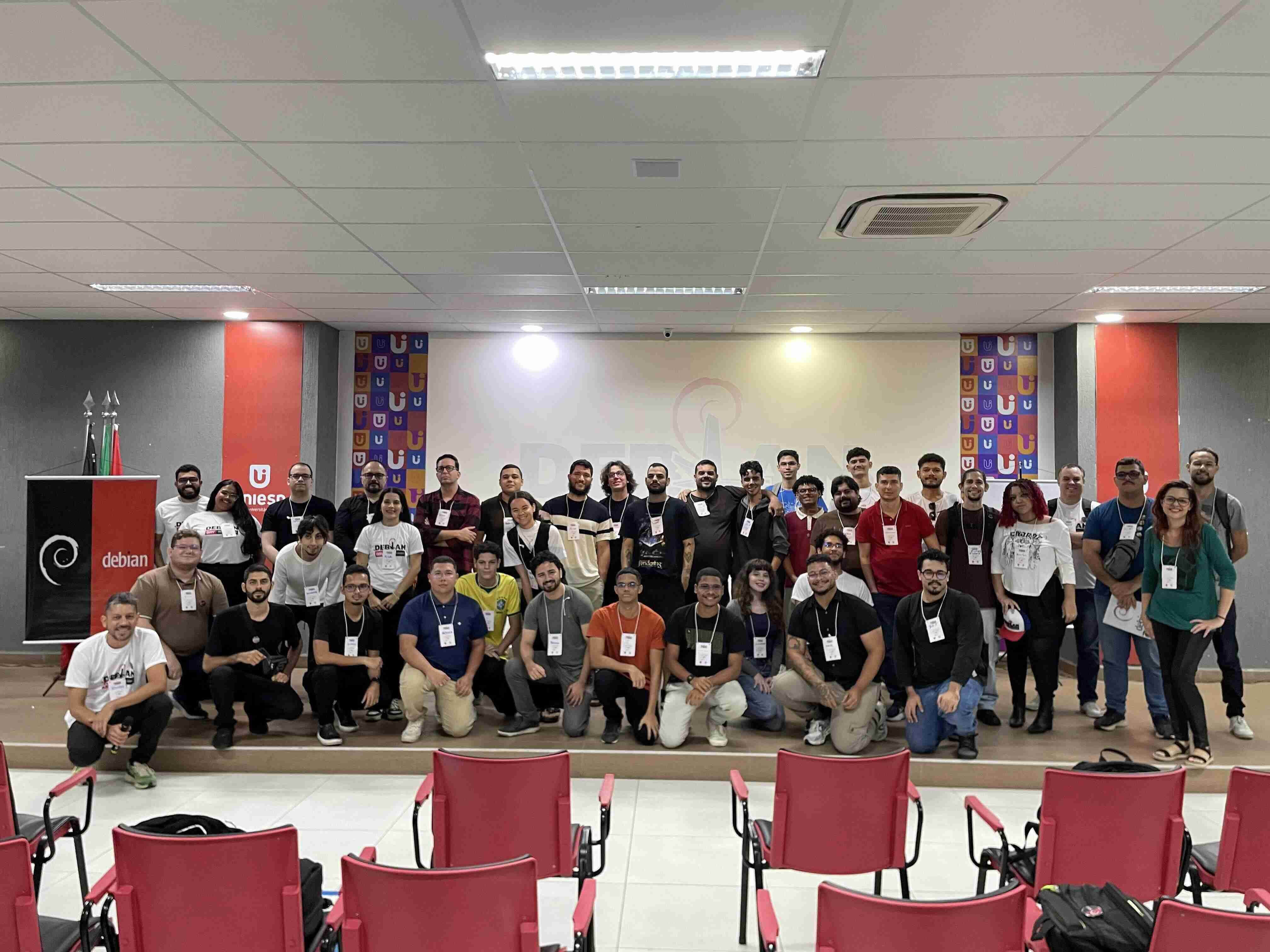
In João Pessoa, we had a two-day event. The first day was dedicated entirely to workshops, and I ran a packaging workshop for newcomers.
It was the first time I had been responsible for a workshop, and it was a great experience. We didn't have a lot of time, so I decided to start with a 30-minute talk explaining a few things about Debian. For example, I made this image to explain the packaging workflow:
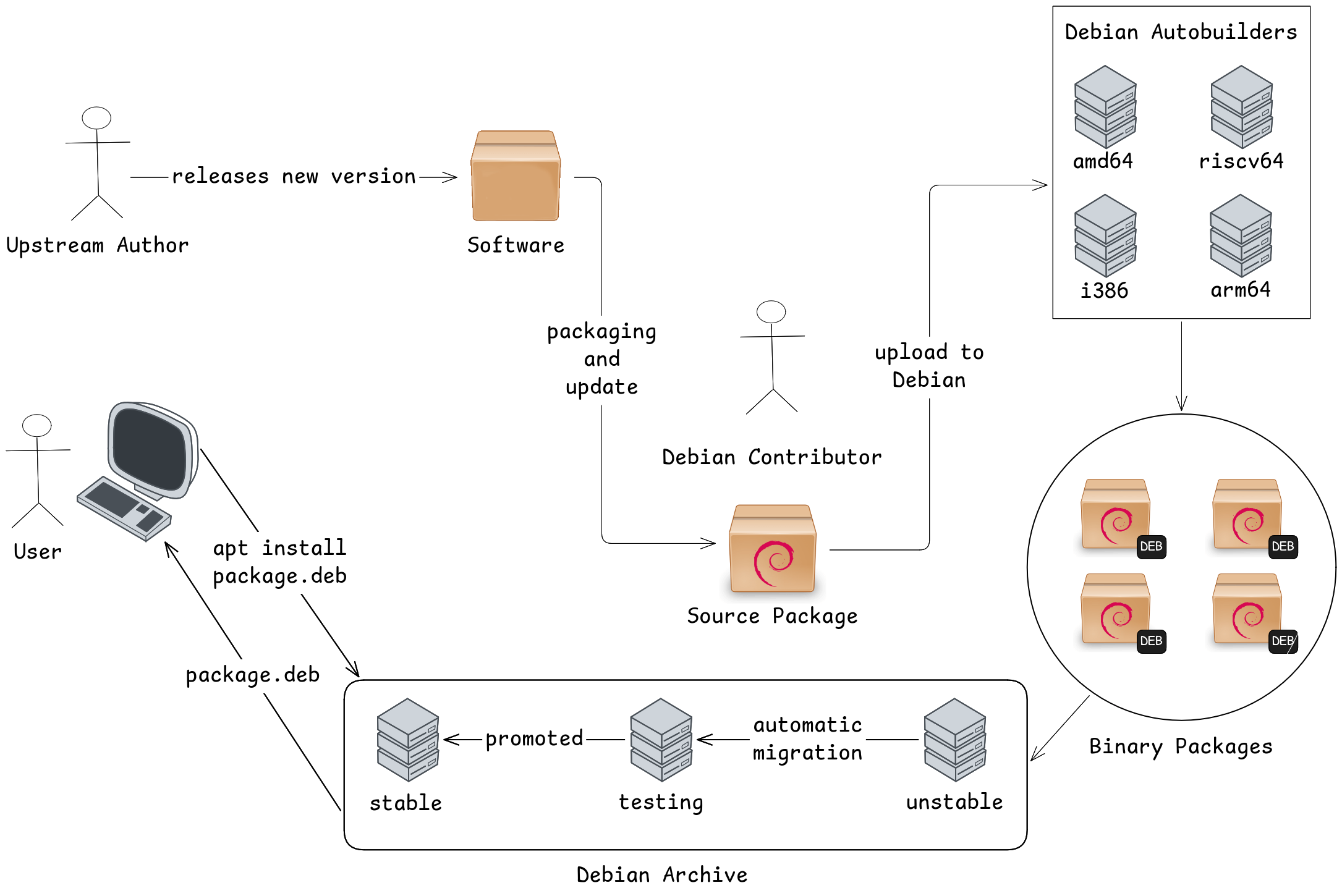
This image was based on The Debian Administrator's Handbook, and I think the participants really enjoyed learning about this workflow. When I showed the slide with this image, it was the moment when I received the most questions.
After the talk, I explained my way of working and what they were going to do. The hardest part was setting up the environment, since my approach uses sbuild + gbp. They were running different Debian releases and, because of my inexperience with workshops, I had some of them configure sbuild with unshare, even though it is only available in stable through backports.
Some of them even managed to learn how to use backports, while others decided to start again using the "old" way.
One thing that helped a lot was the Debian Brasil Wiki. It has all the instructions for configuring sbuild in Portuguese, along with great examples. The Brazilian wiki is an opinionated version of the Debian Wiki. We generally prefer to use it for the convenience of having the exact workflow we follow, as well as an up-to-date Portuguese version of our process.
If you want to learn more about the Brazilian community, you can find more details in the schedules from previous DebConfs. We almost always had a talk about the community and its activities.
In the end, everyone successfully set up their development environment, and all six participants made their first contribution to Debian. If you take a look at my upload tracking page, you will see that every upload made on August 15, 2026 was a sponsored upload from this event. One of them appear twice in the list because I sponsored the upload and also made some other changes.
I also asked all of them to put this in their changelog:
* My first contribution!The idea was to make it clear to other people that they were only
working on small Lintian issues as a way of learning and understanding
the process. By the way, I made a UDD
query to find packages with the following Lintian tag:
redundant-rules-requires-root-no-field. To fix this issue,
they only had to remove one line from the debian/control
file.
It is obvious that these uploads are not particularly useful. I call them "motivational uploads" because my goal is to help newcomers understand the process and immediately give them the reward of having made a contribution to Debian.
I'll try to keep in touch with them. My plan is to hold another session, this time remotetly, to help them continue contributing to Debian. In fact, I already have another package prepared by one of them waiting for my review.
The second day was a full-day event featuring a bunch of talks from the local community. I gave a talk explaining the new members process.
I was the only Debian Developer at the event, and I think having a DD there made a real difference. Being there to answer questions, and simply being present, makes Debian feel more tangible and accessible to people.
A big shout-out to Rafael Rocha, who put in a lot of work to make this event happen, with the help of many volunteers who contributed along the way.
Brasília
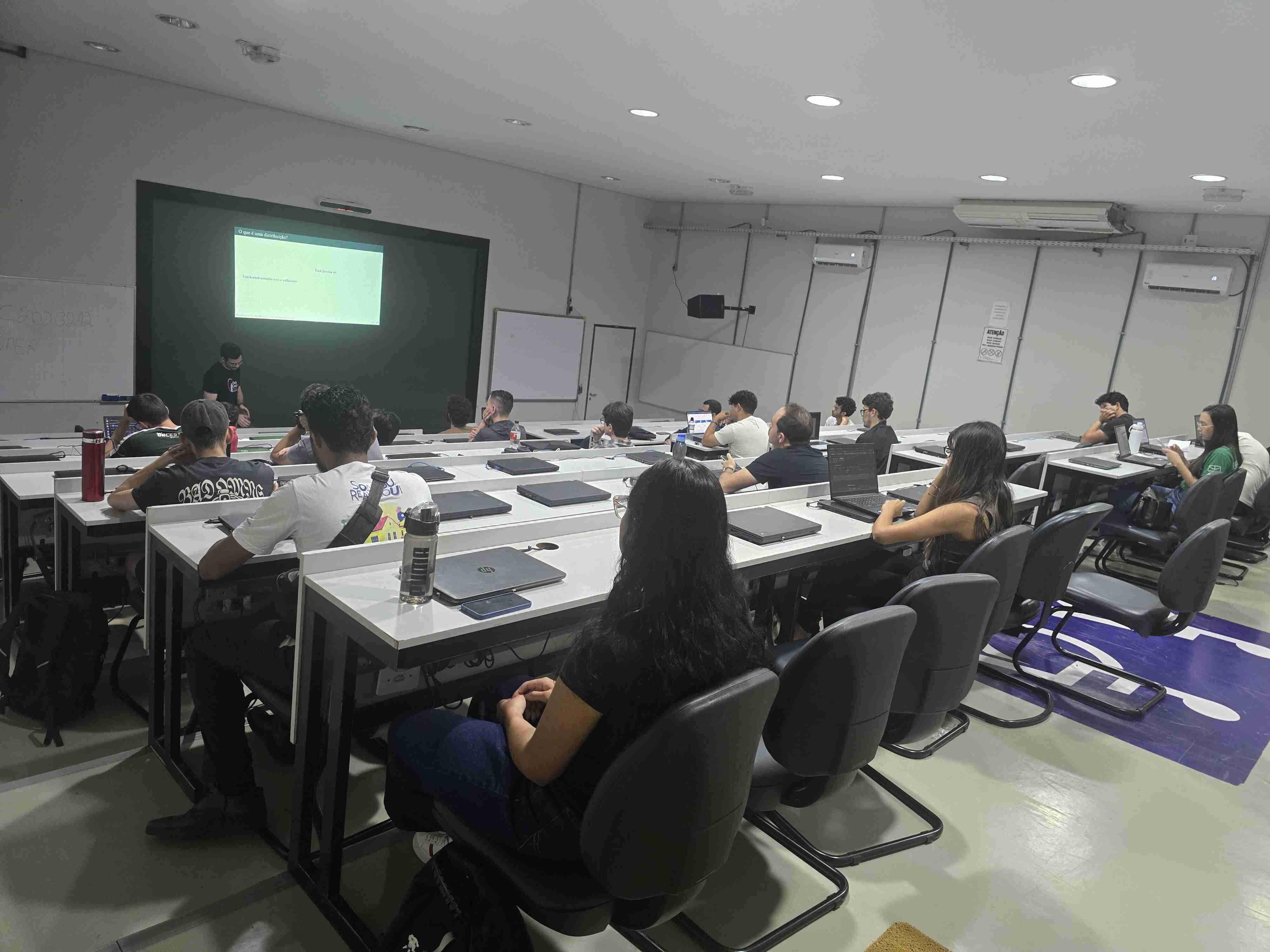
One thing I really like about Debian Days is that each place has its own way of doing things. In João Pessoa, we had a MiniDebConf-like event, while in Brasília, we had something smaller but still very valuable. We decided to keep things simple: talk to a few students at the University of Brasília (UnB) and then go somewhere to eat and have a few drinks.
A bit of history
For those who don't know, the DebConf 19 was held in Curitiba, Brazil. After the event, Arthur Diniz got really excited about Debian and decided to go back to his University, UnB, to share his experience and encourage more people to contribute to Debian.
I attended one of his talks, thanks to Joenio Costa, who invited Arthur to give the talk. Joenio was also my professor at the time and a Debian contributor. I really liked what Arthur had to say about free software, and he did a great job of presenting the Debian community as a friendly and welcoming place.
So I decided to attend local meetings of the Debian Brasília community, which had been inactive for a long time. Lucas Kanashiro was the Debian Developer who answered our questions and, as I mentioned earlier, simply being there made Debian feel more tangible.
Everything stopped when the pandemic began. Then, towards the end of 2020, I saw a message in the Debian Brasília channel saying that the meetings were back, this time remotely. I was hesitant to join because, back in 2019, I hadn't managed to make a packaging contribution, even with their help. I had eventually given up on the process. So this time, I decided to join the meeting with something already prepared for review. I watched all of Eriberto's packaging videos, picked a random package, and joined the meeting.
I remember Kanashiro being excited that someone had just shown up with something ready for review. At the time, it was only the second meeting since Debian Brasília had come back online, and none of the newcomers had started working on contributions yet.
During the same meeting, he also convinced us, the newcomers, to give a talk about Debian just three days later.
The MiniDebConf Online Brazil 2020 was happening on Sunday, and the meeting was on the Thursday before it. Since he has great convincing skills, I went along with the idea and prepared the talk with Francisco Ferreira.
That was the rebirth of the Debian Brasília community.
Since then, we have maintained a close connection with the University of Brasília, and today, at least seven Debian Developers are from UnB, whether as former students or former professors.
The reason I told this story is that, even though the Debian Day we held in Brasília was smaller, it is part of something that has been working for us for several years: staying close to an University. We've managed to attract and retain many people who share the same values and interests.
I've hope you all had a great Debian Day. If you're reading this and aren't part of the Debian community but would like to join, get in touch!
Written on 2026-08-23.